Wednesday, June 3, 2020
Dear Future Self
As my freshman year comes to an end, I can easily say this year has been a roller coaster of ups and downs. This had to have been my craziest year of school yet. Going into this year I was so scared because I didn't know anybody else coming into the school, I was scared of the workload and getting lost, and just being submerged into a whole new setting. By the end of this year I had joined the equestrian team who has become my bets friends and family, I have learned the school, got First Honor Roll, and just been super happy. I have been able to open up and put myself out there a bit more. Over the course of this year I have been happy, sad, excited, nervous, overwhelmed, stressed, and beyond all, grateful. This year has taught me so much about myself and how strong I am. I can really get through the hard parts of life as long as I keep fighting. This pandemic has also taught me so much. It has taught me to be grateful for everything in life. I have become more grateful for the little things like the freedom of being able to go into a store whenever, seeing my friends at school, and just seeing friends over the weekend. I will never take any of these things for granted again because now I know how hard it is when those are no longer options. This pandemic has caused lots of stress and overwhelming feelings. Online school seemed as though it would be fun, but after a week it feels juts like isolation. It is the worst feeling to feel as though you are trapped. It has been three months of quarantine and by now it is my new normal. I don't remember the feeling of just walking into stores, eating at restaurants, not leaving the house without a mask, or completing school work in school. Online work is so stressful trying to manage work of six different classes with tests and all the distractions. I wake up at 8 am and don't finish till around 3 pm, so that is 7 hours of work daily that I wake up and start all over each day. I am constantly stressing and overwhelmed, but it is finally coming to an end and I could not be happier. I am expecting summer to be quite slow. There is still not much to do, but things are already starting to open back up. I am excited to just relax this summer and take a break from the stress of society. I am hoping next year is just a regular year wear we go to school and do work there, see friends, see teachers, and just be around people in general. That is something I would have dreaded last year, but that is all I am asking for now. This time in society is strange and it really has impacted so many people in different ways. We are living through a major moment in what now will be history that felt as if the entire world stopped to shut down. It is hard to describe the feelings from this pandemic. It is all about the question of when will it end and will life go back to normal? Nobody knows these answers, but I am ready to find out. For my future self, I hope you have made sure to never take anything for granted again. Live life in a way that you can appreciate everything that happens in some way and appreciate everything you have. Life is full of lessons, but don't let anything stop you or hold you back. Things can get hard, stressful, overwhelming, and tough in general, but if you keep going you will get through it. Keep your good friends and family close because they are the ones who will be there to help you when you need it. Stay strong and keep going.

Friday, May 29, 2020
Octavian and Future Emperors
After Caesars assassination, his nephew and adopted son Octavian took over power at the young age of 18. Octavian, Mark Antony( an experienced general) and Lepidus(an strong politician created the Second Triumvirate. This Triumvirate ends as Octavian forces Lepidus to retire and once Mark Antony became Octavian rival. Mark Antony joined forces with the Egyptians and caused a battle to which Octavian won, the Battle of Actium. This is when Rome became an empire instead of a republic. Octavian became "Augustus" or "exalted one". He was also called the "imperator" or the supreme military commander. Octavian was a great leader. He ran for 40 years (27Bc-14AD), he began the Pax Romana, or era of peace and prosperity for 207 years (27BC- 180 AD). Other accomplishments of his were; expanding the Roman Empire into Africa, setting up civil service to run the gov't/empire(building roads, collecting taxes, setting up police and fire departments, building major facilities, and more). Octavian then died of natural causes. Octavian's power was then passed down to many different emperors with different styles of running Rome. The first one was Tiberus, a ruler from 14-37AD. He was a great general, but not so great as an emperor. He exiles himself after
the death of his son and he left his prefects in charge of Rome. He later died at age 77. Next came Caligula from 37-41 AD. He was a cruel ruler and closer to a modern tyrant. He won power after the death of Tiberus, but he was assassinated by a group of praetorian guards. After Caligula's death, Senators and imperial court tried to re-establish the Republic which failed in the end. Next came Cladius. He ruled from 41-54 AD. He took over because he was the last adult male in his family. He was not the average ruler, he had many infirmities, but he was a good ruler who built roads, aqueducts, canals, and started the conquest of Britain. He eventually died from poisoning from his wife. Next came Nero, the son of Cladius and ruler from 54-68 AD. Nero emphasized the arts and wanted to rebuild Rome to become more majestic. He was not wise in his spending on money to the point of over spending and raiding temples in search of money.
the death of his son and he left his prefects in charge of Rome. He later died at age 77. Next came Caligula from 37-41 AD. He was a cruel ruler and closer to a modern tyrant. He won power after the death of Tiberus, but he was assassinated by a group of praetorian guards. After Caligula's death, Senators and imperial court tried to re-establish the Republic which failed in the end. Next came Cladius. He ruled from 41-54 AD. He took over because he was the last adult male in his family. He was not the average ruler, he had many infirmities, but he was a good ruler who built roads, aqueducts, canals, and started the conquest of Britain. He eventually died from poisoning from his wife. Next came Nero, the son of Cladius and ruler from 54-68 AD. Nero emphasized the arts and wanted to rebuild Rome to become more majestic. He was not wise in his spending on money to the point of over spending and raiding temples in search of money.
Tuesday, May 26, 2020
The Plebeians and Julius Caesar
I will be taking my test on Tuesday, June 2nd at 1:25pm-2:15pm.
The first few slides discuss the benefits of tending to the needs of the plebeians. It discussed giving the bread or food and circuses for entertainment. The ruler Tiberius Gracchus was the one to trying pleasing the plebeians first. Military generals worked to get them a share of the land conquered. This also helped to gain the loyalty of soldiers to their military leader rather than Rome or the Republic in general. Julius Caesar was one of the most successful generals. His leadership was from 100-44BC and during this time he conquered the territory of Gaul or modern France. He was highly liked for tending to the common people and even liked by more popular people. Two of the higher up or powerful people were Pompey, conqueror of Syria and Palestine, and Crassus, richest man of Rome and even close to all time, to which he later formed the First Triumvirate("rule of three men"). Caesars ruling was as a consul for one year and him appointing himself governor of Gail. The First Triumvirate was soon broken as Pompey became a rival of Caesar over jealousy. This rivalry cause a clash of army from Caesar's army and Pompey's in Greece, Asia, Spain, and Egypt with Caesar becoming out victorious. In 44 BC Caesar became dictator in the beginning for six months, which later became for life. As part of his dictator ship, he made many reforms such as; granting citizenship to people in provinces, expanding the Senate by adding his friends, creating jobs for the poor(public work projects), increase pay of soldiers, and starting colonies for those without land. The republic came to an end after Caesars assassination. He was assassinated by Even Brutus, Caesars ally, because the Senators thought Caesar's rise in power was a threat to their political power. They killed him by stabbing him 23 times after luring him into the Senate, to which the Senators were never punished. The next heir was Octavian, and this was the end to the republic.
The first few slides discuss the benefits of tending to the needs of the plebeians. It discussed giving the bread or food and circuses for entertainment. The ruler Tiberius Gracchus was the one to trying pleasing the plebeians first. Military generals worked to get them a share of the land conquered. This also helped to gain the loyalty of soldiers to their military leader rather than Rome or the Republic in general. Julius Caesar was one of the most successful generals. His leadership was from 100-44BC and during this time he conquered the territory of Gaul or modern France. He was highly liked for tending to the common people and even liked by more popular people. Two of the higher up or powerful people were Pompey, conqueror of Syria and Palestine, and Crassus, richest man of Rome and even close to all time, to which he later formed the First Triumvirate("rule of three men"). Caesars ruling was as a consul for one year and him appointing himself governor of Gail. The First Triumvirate was soon broken as Pompey became a rival of Caesar over jealousy. This rivalry cause a clash of army from Caesar's army and Pompey's in Greece, Asia, Spain, and Egypt with Caesar becoming out victorious. In 44 BC Caesar became dictator in the beginning for six months, which later became for life. As part of his dictator ship, he made many reforms such as; granting citizenship to people in provinces, expanding the Senate by adding his friends, creating jobs for the poor(public work projects), increase pay of soldiers, and starting colonies for those without land. The republic came to an end after Caesars assassination. He was assassinated by Even Brutus, Caesars ally, because the Senators thought Caesar's rise in power was a threat to their political power. They killed him by stabbing him 23 times after luring him into the Senate, to which the Senators were never punished. The next heir was Octavian, and this was the end to the republic.
Thursday, May 21, 2020
Rome Essay Topic
For my Rome essay, I have decided to to choose topic A.) Compare and contrast the government of ancient Rome with the government of modern-day United States. I would begin with discussing the change in Romes gov't from a tyranny, to a monarchy, aristocracy, and finally a democracy. The Romans rebelled against their tyrants because of how poorly they were treated. They then got a king who was just as bad as a tyrant, Lucius Tarquinias Superbus, who seized power. Within that family there was a lot of jealousy and violence between everybody. There was murder for power, cheating, and lies. This family was finally expelled from Rome and all agreed to never be ruled by a king again. Next came the aristocracy. This is where two consuls were elected officials. There terms in office lasted one year. The consuls were always the aristocrats, or in Rome the Patricians. The duties of these consuls involved dealing justice, making law, and commanding the army. Another interesting thing is that the consul could veto one another power. The fifth century BCE the patricians held the most power although 98% of the population was the plebeians or common people. The patricians held this power by having plebeians serve in the army, plebeians could not hold office power, the plebs were threatened with debt slavery, and they had no legal rights. These laws and code was officially written in The Law of the Twelve Tables in 450BCE. This is where the tribunes were elected as leaders. This is the next part of the essay describing the similarities in the Roman gov't. Both have a the three branches of gov't; executive, legislative, and judicial. Both also have their written legal code. The differences are what each branch and code have within. The first branch is the executive.
Rome: Untied States:
Two consuls(leaders) President and Vice President
one year term Four year term
can appoint dictator for a six month term Veto power of proposed laws
Veto power from each leader
Both: Two main leaders(just different power to each) and in charge of military
Legislative
Rome: United States:
Senate of 300 aristocrats with lifelong terms Senate 100 people(two from each state)
Assemblies of 193 to later 373 members(lifelong) Six year terms
House of Representatives 435
members(2 year term)
Both: have group of Senate and large group of members to represent the people
Judicial
Rome: Untied States:
Praetors Supreme Court (nine members)
Chosen by the Centuriate Assembly Lifelong terms
One year term Appointed by President, Confirmed by Senate
Legal Code
Rome -Twelve Tables Untied States- Bill of Rights
Publicly displayed in the Forum First ten amendments of the Constitution
Gave rights to plebeians(common) and rich Gives freedoms and rights to everybody
Only protected free-born male citizens
The two governments are very similar. Most of the differences between the branches are number of officers elected, their terms, and the power they have. Rome was not as fair as the United States is to the common people. In the United States everybody is given the same rights and equality. The United States is known for the freedom and diversity among the people. Rome was a little more in favor of the aristocrats who were given more power. The Romans did not settle to things they did not want. That is a lot like the United States, this country was founded on wanting Independence and a voice.
Rome: Untied States:
Two consuls(leaders) President and Vice President
one year term Four year term
can appoint dictator for a six month term Veto power of proposed laws
Veto power from each leader
Both: Two main leaders(just different power to each) and in charge of military
Legislative
Rome: United States:
Senate of 300 aristocrats with lifelong terms Senate 100 people(two from each state)
Assemblies of 193 to later 373 members(lifelong) Six year terms
House of Representatives 435
members(2 year term)
Both: have group of Senate and large group of members to represent the people
Judicial
Rome: Untied States:
Praetors Supreme Court (nine members)
Chosen by the Centuriate Assembly Lifelong terms
One year term Appointed by President, Confirmed by Senate
Legal Code
Rome -Twelve Tables Untied States- Bill of Rights
Publicly displayed in the Forum First ten amendments of the Constitution
Gave rights to plebeians(common) and rich Gives freedoms and rights to everybody
Only protected free-born male citizens
The two governments are very similar. Most of the differences between the branches are number of officers elected, their terms, and the power they have. Rome was not as fair as the United States is to the common people. In the United States everybody is given the same rights and equality. The United States is known for the freedom and diversity among the people. Rome was a little more in favor of the aristocrats who were given more power. The Romans did not settle to things they did not want. That is a lot like the United States, this country was founded on wanting Independence and a voice.
Monday, May 18, 2020
Leadership and Life in Rome
Many problems surfaced after the Punic Wars. One of the largest problems was form the economic struggles. The wealthy citizens of Rome owned large estates and had enslaved people as workers. These enslaved workers took up 1/3rd of Romes population by 100BC. The poor citizens, often former soldiers or farmers, could no longer compete with the wealthy class. The former poor landowners had sold the land they had to the plebeians for money, but that led to many homeless and jobless citizens. The Gracchus brothers were two tribunes who attempted to help Romes lower class. They proposed reforms such as limiting estate size and giving land to the poor. These brothers were not liked and both had terrible deaths, Tiberius died in 133BC and Gaius died in 121BC. Generals began to take control and they would choose the poor citizens to take as soldiers. They would do this by offering them pay and land to join. One military leaders was Julius Caeser in 60BC. He was voted consul in 59BC along with Crassus and Pompey to become triumvirate group or group of three leaders. He was a governor of Gaul (modern France) from 59-50 BC and he gained many of the peoples trust and loyalty. He was a strong military leader and he took absolute power or control in Rome. He granted citizenship, increase pay for soldiers, and creating jobs for the poor. Caeser was then murdered due to many peoples fear of his success and power. Once he died, civil war broke out a second time just like the deaths of the Gracchus brothers. Three people who banned together after Julius Caesers death were his grandnephew and adopted son Octavian, an experienced general Mark Anthony, and a politician named Lepidus. This group was the Second Triumvirate that ruled for 10 years together. This triumvirate ended due to jealousy and violence troubles. Octavian forced Lepidus to retire and Mark Anthony became a rival. This broke out in a civil war. Octavian then changed his name to Augustus and was called a imperator, or "supreme military commander". Rome was then empire or ruled by one man. The Pax Romana was a time of peace for 207 years during Augustus ruling. Augustus stabilized the frontier, glorified Rome with amazing public buildings, set up a government that'd last years, and setting up a civil service (the pay for those employed in the civil administration of government. The trade and agriculture is what kept them well in economics. Ninety percent of the people were engaged in farming and the Romans would trade to gather whatever else they needed with places such as China, India, Greece, Russia, and more. High values in Rome consisted of discipline, strength, and loyalty. The poor citizens lived in the countryside to work on their farms or land. The smaller cities were filled with merchants, soldiers, foreigners, slaves, and philosophers. This created a very diverse society. Slaves were an important part of Roman life. Slaves consisted of all different people; men, women, children. The slaves could be bought, sold , rewarded, set free, put to death, and bought as their owners saw fit. The powerful or divine forces were called numia. The gods and goddesses were honored in hopes to gain favor and avoid misfortune. In Rome, government and religion were linked. Important gods and goddesses were, Jupiter, father or the gods; Juno, his wife and watched over women; and Minerva, goddess of wisdom and the arts. Worship of the emperor was part of the official religion of Rome. The lifestyle was the rich lived expensive lives while the common people lived with the necessities.
Friday, May 15, 2020
Punic War
The Punic War was a group of three major wars for Rome. This war was the Roman Legion against Carthage from 246-146BC. The Roman legion was 5000 soldiers who were apart Romes elite infantry. Some of their common weaponry were shields, swords, daggers, armor, and tunics. One of their strong strategies was on horseback with their cavalry. The first of the three wars was from 264-241 BC. This was a battle of the navy located on the island of Sicily in which the outcome was Rome winning this battle. The Second Punic War was from 218-201 BC. In this battle, Carthages general Hannibal took control for Carthage. He attacked from from the North after crossing Iberia or Spain and the Alps. This battle was once again won by Rome. The final war of the Punic Wars was from 149-146 BC. Rome was tired of the attacks and threat of Carthage so strong leaders such as Scipio and Tiberius Gracchus helped to attack Carthage. The Romans burned the city and sold all 50,000 people left in the city to slavery. The rest of Carthage's land was annexed and taken over by Rome. This then led to millions of slaves entering Italy. The poor or common people began to lose lots of their earnings to the wealthy to pay back debt. The economics were changing due to wars. Slaves were now put to work on farms for aristocrats or the wealthy. This change benefited the wealthy, but hurt the poor.
Tuesday, May 12, 2020
Tarquin and the Roman Gov't
Tarquin was a very harsh and careless ruler of Rome. He seemed to be heartless. He gained power by seizing and killing the previous king, Tarquins grandfather(fifth king). The entire family was found to be in scandals where they cheated, blackmailed, threatened, and even killed innocent people. Tarquin was extremely cruel to everybody, which is why he and his wife were thrown out of Rome he was the final tyrant of Rome. The next to discuss is the republic gov't. The rulers in the type of gov't were consuls. These two rulers were elected officials who were patricians. They had an important role of dealing justice, making laws, and commanding the army. One consul could even veto the other or reduce the power of the other. Plebeians were 98% of the population, but the patricians still had majority power around 5th century BC. The written law of the Romans were The Law of the Twelve Tables in 450BC. The Romans had a mix of democracy, aristocracy, and monarchy with the peoples assembly and the tribunes, the senate, and the consuls. Both our current democracy and the Roman republic have the three branches of gov't as executive, legislative, and judicial. The Twelve Tables of Rome is their legal code like the Untied States Bill of Rights.
Monday, May 11, 2020
Rome First 8 Slides
The Etruscans were the ones to settle in Rome. They came from the north-central peninsula. There mmost common occupations were metalworkers, artists, and architects. Two myths they have that was Virgil's Aneneid where Aeneas escapes Troy and the story of Remus and Romulus. The Greeks also had a major impact on the settlement of Rome. The Greeks had colonies set up around the Mediterranean Sea where the Romans took ideas such as: religious beliefs, alphabet, art, military techniques, and weaponry. The first settlers were the Latins. The Latins are descendants of Indo- Europeans. They settled on the banks of the Tiber which was an important port for trading ships and transportation. Palatine was one of the major settlements of Rome. The Tiber was an important river in Rome. Marshy areas in between the cities were called Forums. The Cloaca Maxima was one of the largest ancient drains built into the Tiber. Tarquin (Lucius Tarquinias Superbus) the Proud's grandfather was the one to build Cloaca Maxima. Lucius Tarquinias Superbus was the seventh and final king of Rome. He was a tyrant in the old way, just a powerful leader, and the modern sense being harsh and cruel.
Thursday, May 7, 2020
Chi Cago Rome Song
Today we got to listen to the Rome song. I enjoyed the song. I thought it was a fun song and I enjoyed listening to this song because it was catchy to me. Often songs that are catchy are easy for me to remember. This song will be able to help me in the future if I can remember the lyrics. It was entertaining and I also like the original song so it more enjoyable to listen to. It was quite funny, but effective. I also thought the name Chi Cago was quite funny. It was nice to get a break from all the just book work and just take a minute to laugh. This reminds me of all the Egypt and Mesopotamia songs. I can't imagine how long it takes to create these songs with the right words to fit the unit and beat.
Tuesday, May 5, 2020
Roman Twelve Tables
The Twelve Tables in Rome was their written law. These laws were written down in 451BC to give the Plebeians or lower class reassurance that their laws are set in writing. The Plebeians asked for this because during this time they were just the lower class. They had little to no rights and no voice within politics. The laws written down helped ensure that they would get their voice. These laws were written on clay tablets by 10 men. They also began to have assemblies where laws were proposed, discussed, and voted upon by citizens. The main goal or idea was that all free citizens would have the right to the protection of law. The Twelve Tables gave Plebeians a voice in politics. The Patricians no longer had overall ruling, the Plebeians would assemble their consul to be their representatives. The Roman government went through many phases staring with monarchy, aristocracy, and then resembling a democracy. The noble and wealthy could no longer overrule the common people. The Twelve Tables reminds me of the United States Constitution since it sets our morals and laws for the people to follow and view. It sets a standard and makes them put into place. They both also allow for the reforms to better our country and government.
Friday, May 1, 2020
Roman Aqueducts
 This is a picture if a Roman aqueduct. I think these are very pretty to look at, but they also have an interesting background.I love arches so these are just pretty to me. I think it looks beautiful in the water and how open they are. The purpose of these aqueducts were used to pump water and bring it to Rome from far away places. These aqueducts were most commonly found underground. Some of these are still in use today which is crazy to me. I can't imagine having to create something like this, but the Romans did it in 312 BC.The engineering for this and idea is incredible for how long ago they built these. They were so useful and can even be found in modern times in the United States. I think this is just a pretty piece of architecture that is also beneficial in society.
Thursday, April 30, 2020
Social Status in Rome
The Romans main social classes consisted of the Plebeians and the Patricians. The plebeians were the common people in Rome. They were the larger group out of the two. These people had regular jobs and they also did not have as much power compared to the wealthy class. Common jobs for plebeians were farmers, artisans, and merchants. The patricians were the wealthy class. These people had the most power in Rome . They were the land owners and royalty in Rome. This is very similar to how it was in Greece at the time. Greece had the common people who had little power in the beginning, but over time they were treated more equally to Aristocrats. Aristocrats were the wealthy land owners who held the most power. These classes are almost exactly alike. The two classes are split by wealthy and landownership. The majority of the population falls under the common people. The common people are not given as much power in society as the wealthy are.
Wednesday, April 29, 2020
Rome Definitions
- Republic - A type of government where citizens held most power. They had the right to vote for their leaders.
- Patrician - The wealthy landowners who held the most power. The highest class at this time.
- Plebeian- The common people in Rome. Most plebeians were farmers, artisans, and merchants.
- Tribune- Representatives elected by plebeians at an assembly who protected the rights of the plebeians from unfair acts of patrician rulers. They gave a voice and justice for the common people.
- Consul- Officials or rulers whose power was limited to command the army and direct the government.
- Senate-The legislative and administrative functions in the republic.They were 300 wealthy aristocrats chosen by the citizens. They had great influence on foreign and domestic policy.
- Dictator- A leader who gad absolute power to make laws and command the army. They had a short span of time in power. They were chosen by the consuls and then elected by senate.
- Legion- Large organized military units of Roman soldiers.
- Punic Wars- A long war fought in 246BC against Rome and Carthage
- Hannibal- A young, strong leader who was a Carthaginian general. He was very strong with his military and he wanted to avenge Carthage's earlier defeat.
Tuesday, April 21, 2020
Potential Essay Questions
For a five-paragraph essay, the main topic
could be about the major tyrants of Ancient Greece. The first paragraph can
describe what a tyrant’s role is in that society, to be a powerful leader who seizes
power by appealing to the common people support. Describe how tyrants impacted
the Greek society and their importance. The second paragraph can be about Draco.
This paragraph can describe his ruling during 621BCE and his strict rules or
laws: all Athenians ae equal under law, death is most common punishment for
crimes, debt slavery is allowed. The third paragraph would be about the next
tyrant Solon(594BCE) who brought reforms, which included; outlawing debt
slavery, all Athenian citizens can speak at the assembly, and any citizen can
press charges against wrongdoers. The fourth paragraph can be about Cleisthenes
from 500BCE. Cleisthenes brought some of the most changes to Ancient Greece
since he brought the first ever democracy. Some of his reforms included; All
citizens could submit laws for debate at the assembly, created Council of Five
Hundred( almost like a jury system by having members at random to meet and
consider laws), and only free adult male property owners born in Athens were
considered to be a citizen, and women, slaves, and “foreigners” aren’t citizens
. The fifth paragraph is the conclusion to what a tyrant is and their impact on
Greece.
Monday, April 20, 2020
Five Questions for a Test
Here are five potential questions for our test.
Which of the following is not a type of Greek drama?
A.) Tragedy
B.) Romance
C.) Comedy
Which of the following was a group of strong, warlike people, who had one of the strongest infantries?
A.) Athenians
B.) Phalanx
C.) Spartans
D.) Zeus
Match the God/Goddess to their ruling:
1.Poseidon 2.Wisdom, skill, and warfare
2.Athena 4.Music, arts,healing (Sun)
3.Zeus 5.Love, beauty, desire
4.Apollo 1.The Sea, rivers, floods
5. Aphrodite 3. Sky, thunder, law, order
Which one of the following philosophers taught Alexander the Great?
A.) Aristotle
B.) King Phillip II
C.) Socrates
D.) Plato
Which of the following were tyrants in Ancient Greece?
A.) Solon
B.)Cleisthenes
C.) Draco
D.) All of the above
Friday, April 17, 2020
Platos Best and Worst Ideas Video
1.) Plato defines The Forms as the ideal versions and concepts of ideas of the things around us. These are main concepts in life that often have a higher potential that has not been reached yet. These Forms are the fullest version of the potential in ideas of life. Plato promoted that people strive to get the fullest versions of the ideas and concepts.
2.) Three groups in Plato's ideal society were like three social classes. There were the producers, the military, and the rulers. These were supposedly the three major groups within Plato's idea.
3.) Plato's thoughts on women were sometimes inconsistent. Some of his ideas that women were equal in the sense that they should be able to have part in ruling the society, but he also compared women to children. Another bad idea from Plato was about the womb within a women. He had said that a womb is like a live-animal that moves around within women. It makes that sound bad or even embarrassing to women.
4.) The Noble Lie that Plato proposed was that we are all born with either gold, silver, or a mixture of brass and iron. These composure's determined a persons role in life. This almost sounds like a Caste system. The things that a person is born with determines their role or life in terms of society standards.
Wednesday, April 15, 2020
Bucephalus Poem
Here is my best attempt at writing a poem. I am not the best with poetry. I am not sure if it was close to being good, but I did try my best;
He was a mighty horse with coarse hair
I had never seen a horse so rare
Alexander was the only one who could care for Bucephalus
We could get close if he'd let us
He would ride into battle with Alexander in the saddle
Alexander was the source of this loyal horse
Alexander was the only one he loved
Bucephalus would follows Alexanders lead
He had the strength and speed
That would be all he'd need.
Friday, April 3, 2020
Architecture in Athens
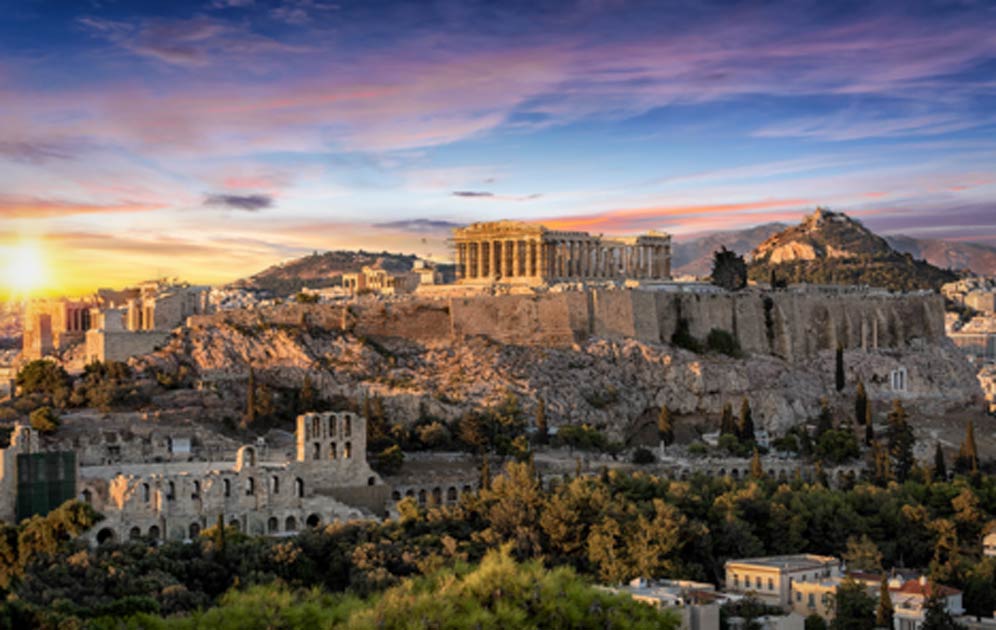
Young, Sarah P. “The Acropolis Of Athens: A Golden Age Legacy.” Ancient Origins, Ancient Origins, 19 Mar. 2020, www.ancient-origins.net/artifacts-other-artifacts/acropolis-athens-0012388.
This first image is of a Greek Acropolis. An acropolis is a building set on top of a hill. I think these are beautiful and I would love to be visit. I love the view looking over the hill and the way the sun hits the building. Most buildings are built for the Gods and Goddesses and I think that is why they would build these on top of great hills. These temple structures also are full of columns which is one thing I adore.
Nerenberg, Ira, and David Porter. “Visiting The Parthenon: Athens, Greece.” The Roaming Boomers, 29 July 2017, www.theroamingboomers.com/visiting-the-parthenon-athens-greece/.
 This is an image of the Parthenon in Athens. This building was for Athena, the Goddess of Wisdom and War. This was also an acropolis. These temples are massive and were originally made with limestone and marble, the best for the Gods and Goddesses. I love the Greek architecture because it is filled with old ruins and temples made for higher beings. I love the looks of the columns in all buildings and even the buildings that had fallen apart. The buildings resemble and fit each other without being the same.
Wednesday, April 1, 2020
Theaters in Greece
1. In ancient Greece, plays were first done as a source of entertainment originating in Athens. This was a sign of both civic pride and a tribute to the gods. There are three kinds of theater performances. The first kind of drama was tragedy. This type of drama was serious and had main topics of love, war, hate, or betrayal. These often had main heroes with an advantage of some sort, but a flaw in character often brought them down. One famous writer of these plays was a man named Aeschylus. The opposite if those dramas would be the comedy. These would feature "slapstick situations and crude humor"(136). These would often make fun of politics and respected people or ideas. Aritophanes wrote the first comedy drama. The fact that people were allowed to make fun of Athens at the time gave an idea to how freely they were allowed to speak within their democracy at the time. The final creative thing done was the writings of epics to account for history. Herodotus was famous for his accurate reporting of then current events in Athens such as during the Persian War. Other writers like Homer wrote of epics and great stories at the time which were unsure to be real or not. Thucydides was one of the best historians to tell of political events that helped future historians know about those times.
 Katz, Brigit. “The Acoustics of Ancient Greek Theaters Aren't What They Used to Be.” Smithsonian.com, Smithsonian Institution, 24 Oct. 2017, www.smithsonianmag.com/smart-news/acoustics-ancient-greek-theaters-may-no-longer-be-so-great-180965360/.
2. A movie I had watched recently "Titanic". This reminded me of a Greek tragedy drama. This movie has love between two main character, Jack and Rose. There is hate between Jack and Roses' fiancee, and there is a disaster of the boat sinking, killing many people. This movie has a serious story line and serious topics within it. There was even a flaw in one of the major characters, Roses' fiancee, where he was too cocky with his wealth and power that he Rose had left him for Jack. All of these things remind me of a Greek tragedy drama.
3.
Katz, Brigit. “The Acoustics of Ancient Greek Theaters Aren't What They Used to Be.” Smithsonian.com, Smithsonian Institution, 24 Oct. 2017, www.smithsonianmag.com/smart-news/acoustics-ancient-greek-theaters-may-no-longer-be-so-great-180965360/.
This is a Greek theater. It seems like a large circle that have seating all around the stadium. At the bottom is a flat spot where the performance occurs. This is pretty much the same as current theaters, other than the fact that the Greek theaters are outside and are built from concrete. Modern theaters are most often inside built to boost performance qualities like sound and lighting as well as comfort for the audience.
Tuesday, March 31, 2020
COVID-19 Challenege
This whole experience of COVID-19 is shocking. This is new to everybody and it is full of unknowns. I am honestly nervous about the future and I have no idea what to expect from all this. I am hoping it ends soon, but I have a feeling it will not. The cyber school forcing students to teach themselves is one of the worst parts. It is really hard for me to focus on five or six subjects a day trying to teach myself new things in each. It makes me worry that I am able to do the work, I may not be truly retaining any of this information. I can't quite tell and that is something that worries me. I am also worried about the possibility of exams. Are exams still in place? I have no idea, but that continues to be a question I have running through my head. While at home I have stayed my honest self. I know I can do the work on my own so that is what I have done. I have kept my integrity and done my own work. This being said, I don't think this crisis is changing people into bad people. I believe that this crisis is just messing with peoples minds in a way that has never happened before. We have been stuck inside, or at least we should be, for three weeks now. People are stressing and panicking because nobody is really sure what to do or how long this could last. I can say for myself I have no idea what is to come, but I am staying hopeful that things will get better fast.
Subscribe to:
Posts (Atom)